Priorities and investment
Decide which improvements deserve attention next, keep the work aligned with your actual business goals and explain what each investment is meant to achieve.
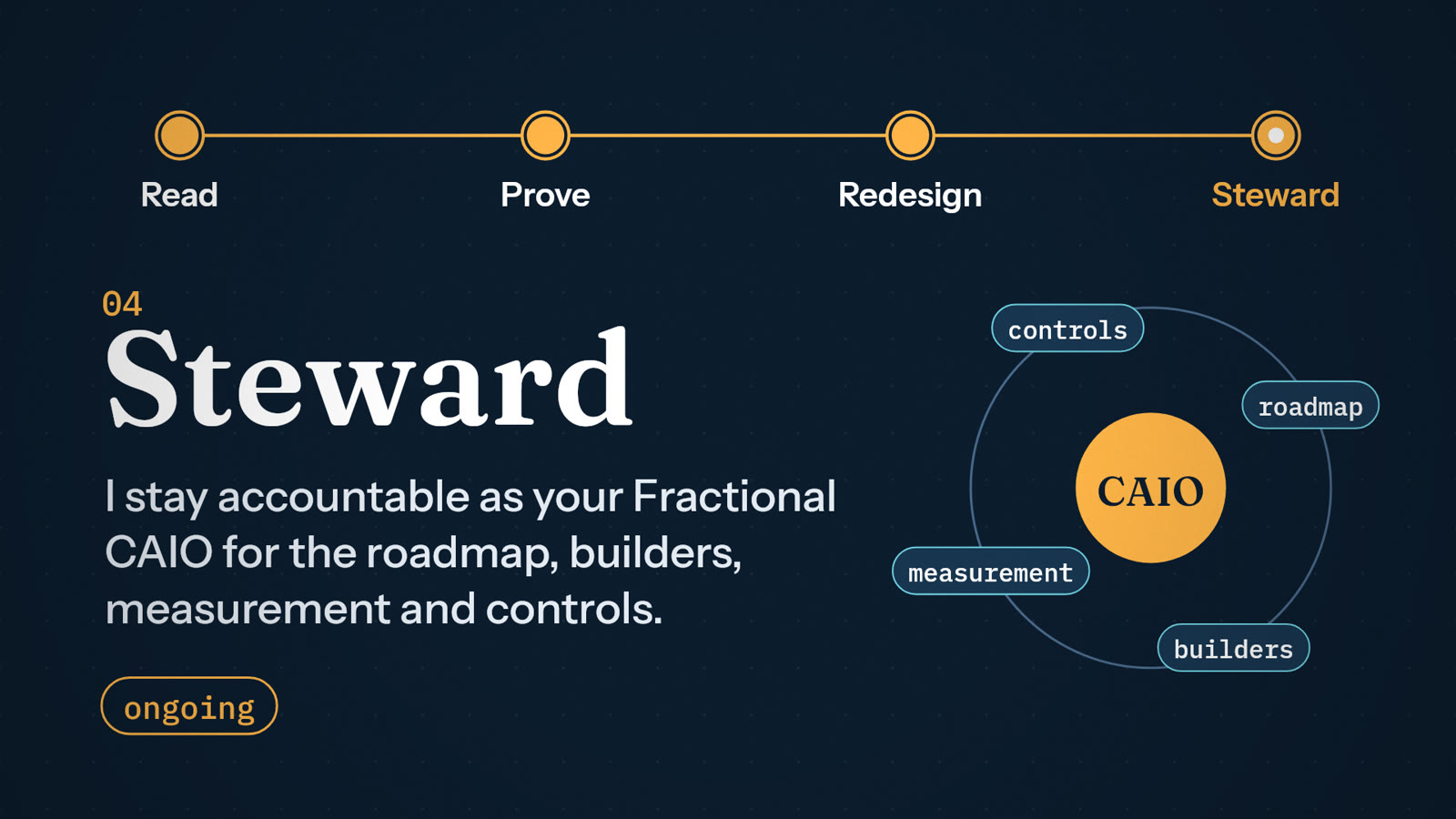
Systems need attention as the business evolves. When your company needs an ongoing operating partner, I can take responsibility for agreed priorities, delivery and continuing operation under a clearly defined mandate.
Decide which improvements deserve attention next, keep the work aligned with your actual business goals and explain what each investment is meant to achieve.
Manage the builders and vendors involved, keep the existing tools working together and make sure changes do not create new headaches elsewhere.
Find out whether the team actually uses what was built, how much time it saves after corrections and what needs to change.
Maintain the agreed boundaries for data, permissions and human decisions. Systems have an owner, review requirements and a route for incidents or exceptions.
Review system health and changes in the work. Coordinate maintenance, retire what no longer serves the business and keep responsibilities current.
Tell you what changed, what it cost, whether it helped and which decisions genuinely need you.
We agree the decisions I can make, the budget I work within and the people who need to participate. You retain authority over the business and the commitments that require your approval.
A regular review keeps work moving. Monthly reporting connects activity to results. Periodic reviews decide whether the priorities, systems and level of investment still fit.
For a one-person company, the relationship can stay direct and focused. A larger company may need coordination across managers and outside builders. The responsibility and fee reflect that scope.

Stewardship is separately scoped after the read and initial proof. The proposal names the systems covered, working capacity, review cadence, response arrangements and recurring fee. It also states which implementation and specialist costs are included.
Substantial new work is agreed before it begins. Accounts, operating records and documentation stay usable for continuity, including a handoff if the engagement ends.
Inspect the operating standardA bounded implementation and a continuing executive role solve different needs. Read what a fractional Chief AI Officer should own, including the questions to ask before hiring.
Tell me what is already in use and where you want the business to go. I’ll respond with a useful next step.