A bounded workflow
We agree where the process begins and ends, who takes part and what a good result looks like. We include the unusual cases that need a person’s attention.
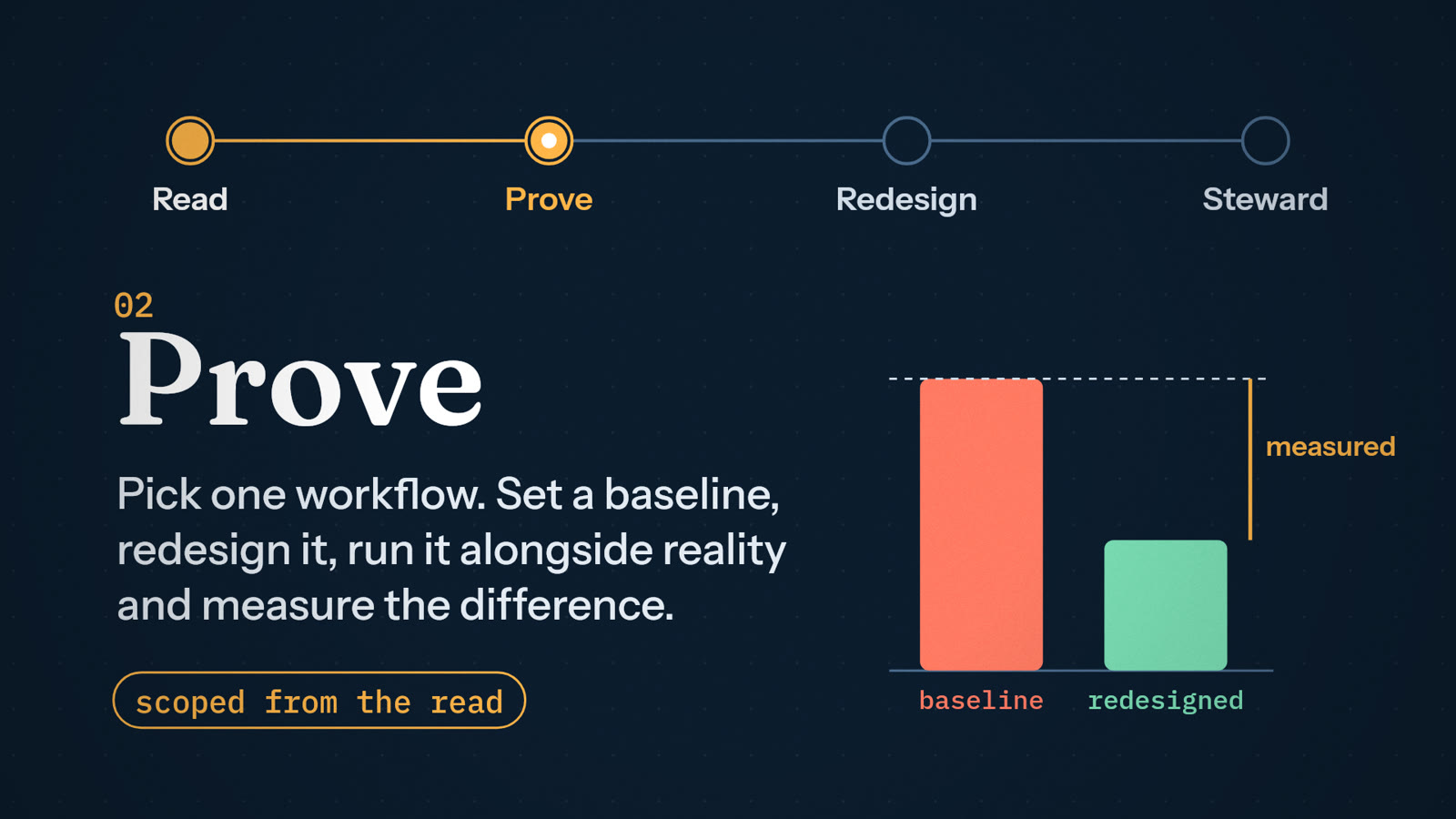
I build one agreed improvement and test it in your business. A workflow is the sequence of steps from a request to a finished result, such as an approved quote. We measure that process before changing it, then compare the new version, including the time people spend checking and correcting it.
We agree where the process begins and ends, who takes part and what a good result looks like. We include the unusual cases that need a person’s attention.
We record how the process works now: the time it takes, how much gets done and where errors occur. This starting measurement is the baseline for judging the change.
I build the agreed software or connect the tools you use. An ordinary rule may handle part of the process; an AI assistant may help interpret a request or prepare a draft.
Where practical, we test the new process alongside the existing one. We record the results and decide together whether to keep it, change it or stop.
A request arrives by email. You search for similar work, pull together the scope and pricing history, then prepare the proposal. Much of the time goes into assembling what you need to exercise judgment.
Software matches the request to relevant company records and flags missing details. The proposed draft shows the past jobs and rates it used. You review it and approve the price, what is included and what the customer is promised.
Illustrative design. The read determines whether this is suitable for your business. Follow the proposed estimating workflow in the Millbrook composite demonstration.
| Measure | What counts |
|---|---|
| Time | Preparation, review, corrections and exception handling, as well as the automated step. |
| Speed and volume | How long customers wait and how much complete work the company handles. |
| Quality | Errors, omissions, rework and the cases that still need intervention. |
| Economics | Implementation and running costs alongside the actual effect on capacity, spending or revenue. |
Time released can create capacity. Cash savings require an actual spending change. The result makes clear which benefit occurred.
The Read is my paid business assessment; a Blueprint adds a detailed system design when one is needed. Those findings inform the build. Before it starts, we agree the price, timetable, access and checks for accepting the result. You receive documentation, a way to report failures and clarity about who will look after daily operation.
If the results justify another change, we agree what to do next. Stewardship is a separate ongoing agreement for maintenance and development of the system.
See the ways to work together →Look for a recurring process with usable records and a result you can measure. The guide below explains how I compare possible starting points.
Tell me what the business does and what you’d like help with. If a detailed assessment would be useful, I’ll explain the $2,500 Read: a 90-minute session and a report with my recommendation.
Show me your businessStart with a short inquiry. I’ll reply personally, usually within two business days, and arrange a free 20-minute conversation when I can help.